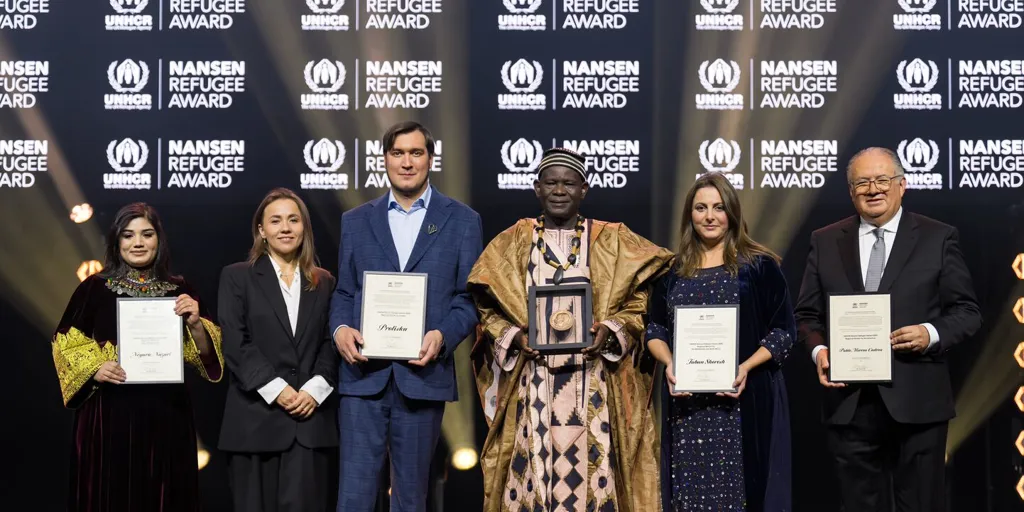
© UNHCR/Anne-Laure Lechat

Worldwide
2025 UNHCR Nansen Refugee Awards: Celebrating humanitarian leadership
A Cameroonian village chief is among those honoured for outstanding courage and compassion for refugees.
 Worldwide
From clean water to mental health support, see how UNHCR is helping to save lives and keep refugees healthy.
When people are forced to flee their homes, even basic healthcare can be out of reach. Without nearby clinics or access to medicine, everyday health needs can quickly become serious risks.
Across the world, UNHCR is working with partners to ensure refugees and displaced families can access the care they need.
This World Health Day, here are five ways this work is making a difference.
Access to healthcare often begins with being recognised. For many refugee families, that starts with something simple: official documentation.
Keitlyn fled Venezuela for Colombia, where her daughters, Kylie and María José, were born.
Today, the girls attend school in Lima, where they are learning and making new friends. But without residency cards, the family could not access essential services, including public healthcare.
UNHCR worked with the government to help refugee children attending public schools obtain official identity documents, making it easier for families to access the support they need.
For Keitlyn, this has made a real difference.
“This is a very important step for us,” says Keitlyn. “Now I will be able to take my children to the doctor if they get sick.”

After fleeing violence in Myanmar, many Rohingya families have sought safety in Bangladesh. Today, over 1.1 million live in Cox’s Bazar, the world’s largest refugee settlement.
Families live in overcrowded shelters made of bamboo and tarpaulin, often with limited protection from heavy rains and strong winds. Water and sanitation systems are stretched, increasing the risk of disease outbreaks such as cholera, especially during monsoon season.
In these conditions, even common illnesses can spread quickly. Access to care can be limited, and preventable diseases are a constant threat to families already facing hardship.
UNHCR works with partners to provide vulnerable families with vital health information and access to vaccines close to where they live.
These efforts help stop outbreaks before they take hold, protecting families and reducing the spread of disease.

Getting the right support during pregnancy can be difficult, especially for displaced mothers. Clinics can be far away, services limited and complications life-threatening without timely treatment.
Across refugee camps in Jordan, healthcare facilities are overwhelmed, with families waiting to be seen. Limited resources are making it increasingly difficult to deliver urgent care.
UNHCR is working to better connect medical clinics across both Za’atari and Azraq refugee camps. By sharing patient information and coordinating care, medical teams can respond more quickly and provide specialised support when it is needed most.
For Elham, this meant she could finally receive proper care.
Unable to access maternal care in Za’atari, Elham was referred to a clinic in Azraq. There, medical staff supported her through a safe delivery, and her daughter, Wateen, was born soon after.
“I am grateful to have a baby girl named Wateen. Her delivery was easy and professional,” says Elham. “The medical team responded quickly… the staff was caring throughout the process. I am deeply grateful for this.

The experience of conflict goes far beyond the loss of a home. Displacement, violence and uncertainty can take a deep emotional toll on people forced to flee, making mental health support essential.
In Ukraine, UNHCR works with partners to provide psychosocial support to people who remain in frontline areas as well as displaced families living in temporary shelters.
For Iryna, this work is deeply personal. She was first displaced in 2014, when she fled her home in Donetsk. During the full-scale war in 2022, she was forced to flee again, this time to Dnipro. Today, she works as a psychologist with UNHCR’s partner organisation, supporting others through experiences she understands all too well.
“Evacuation is not just a change of place of living,” says Iryna. “This is a deep emotional turning point. Our role is to help people not only go through the loss of their home, but also to find themselves in the current moment and move forward.”
This support is helping people process trauma, rebuild resilience and begin to heal.
“Being twice displaced myself, I know exactly how it feels to lose something when you leave. We can help ourselves and recover only when we help others.”

In refugee camps across Maban in South Sudan, access to clean water remains a daily challenge. Water sources are limited, and collecting enough for drinking, cooking and washing often means travelling long distances. For women and girls, this journey can also put their safety at risk.
UNHCR is improving access to clean water by installing multiple pumps across the camps and repairing and maintaining water points. Families are also given buckets and jerrycans, so they can safely collect and store clean water.
These changes are making daily life more manageable. For Thaura, a Sudanese refugee and mother, having water close to home has made things easier and helped keep her family healthy.
“We use water for drinking, washing, cooking and ablution before prayer. It is essential for all daily needs,” she says. “Thankfully water is sufficiently available, so we don’t have to fetch it from distant sources. We are grateful for this.”

A Cameroonian village chief is among those honoured for outstanding courage and compassion for refugees.
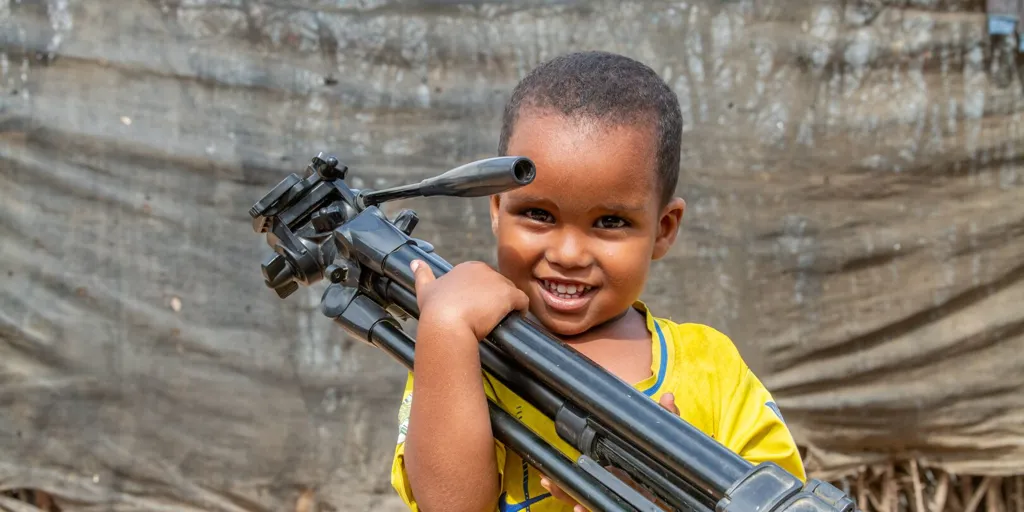
These films explore how the loss of home impacts people forced to flee, encouraging empathy and deeper understanding.
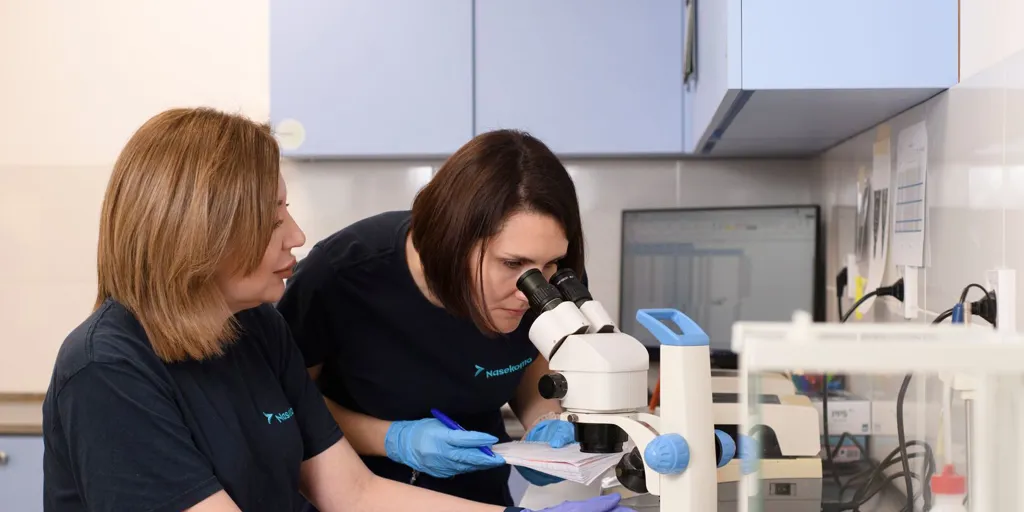
On International Day of Women and Girls in Science, read inspirational stories of displaced women and girls building careers across STEM fields.